allergyatlasCANADIAN TREATMENT GUIDEFor Canadian clinicians

VIT builder.

01

Select venom

Based on the sting history and relevant testing.

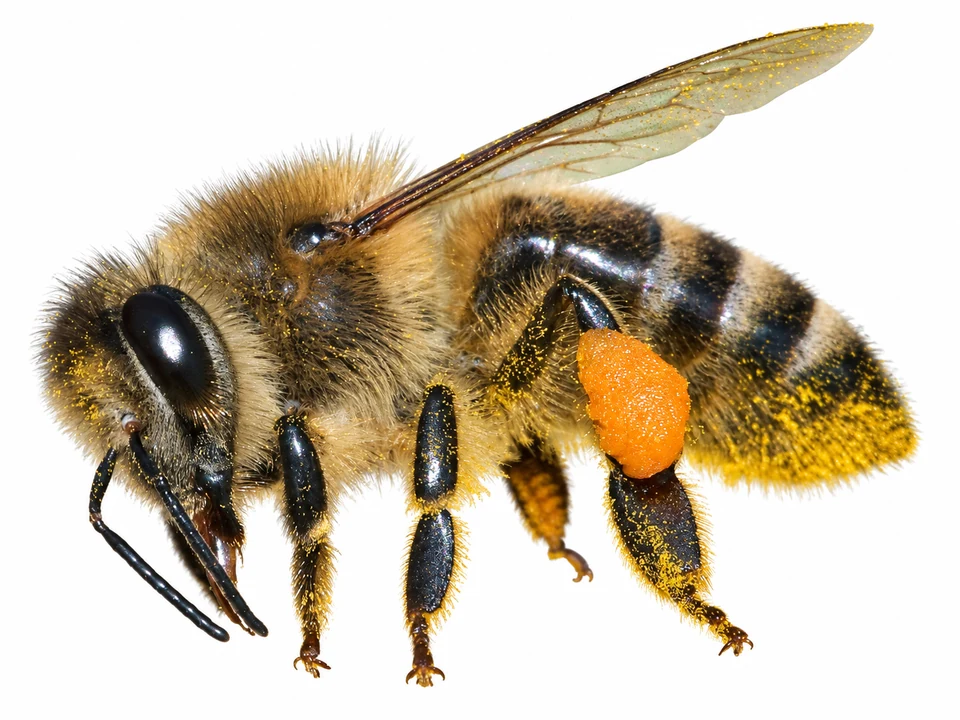
Honey bee collecting pollen on a yellow flower.

Honey bee

Apis mellifera

Hairy body · pollen baskets

100 mcgmaintenance
Biology, nest & product
Identification
Fuzzy, golden-brown body with darker abdominal bands. Flattened hind-leg pollen baskets help distinguish workers from wasps.
Behaviour
Forages for nectar and pollen. Stings commonly follow handling or disturbance of the colony; a worker may leave its stinger in skin.

Wax combs in a sheltered cavity
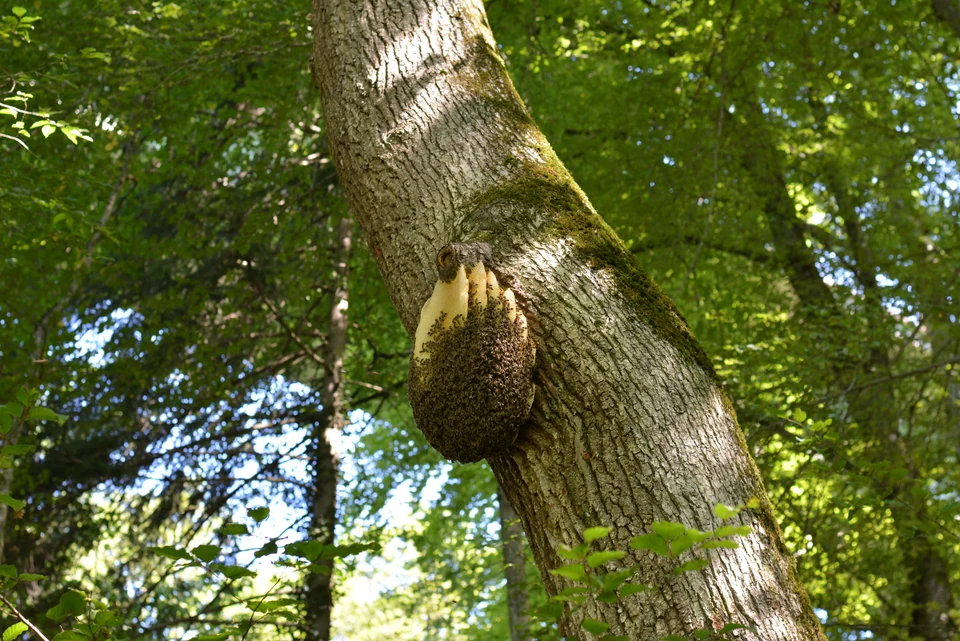
Entire exposed honey-bee nest on an oak trunk, with hanging wax combs and the surrounding tree visible.
Full view of an exposed honey-bee nest on an oak trunk. The hanging wax combs are visible beneath the bees.Joris Egger · CC BY-SA 4.0

Vertical wax combs inside managed hives, hollow trees or building cavities. Colonies can persist through winter.

Original photo ↗Biology reference ↗

HollisterStier venom

Canadian supplier: Juno / Viva Allergy

Five-dose vial
550 mcg · freeze-dried
Reconstitution volume
5.5 mL
Reconstituted concentration
100 mcg/mL
Maintenance dose
1.00 mL SC = 100 mcg

Honey bee venom is distinct from vespid venoms. Frequent exposure, including beekeeping, can favour extended treatment.

Canadian order form ↗
Photo credits & originals

Andreas Trepte, www.avi-fauna.info · CC BY-SA 2.5AI-edited from the original photograph.
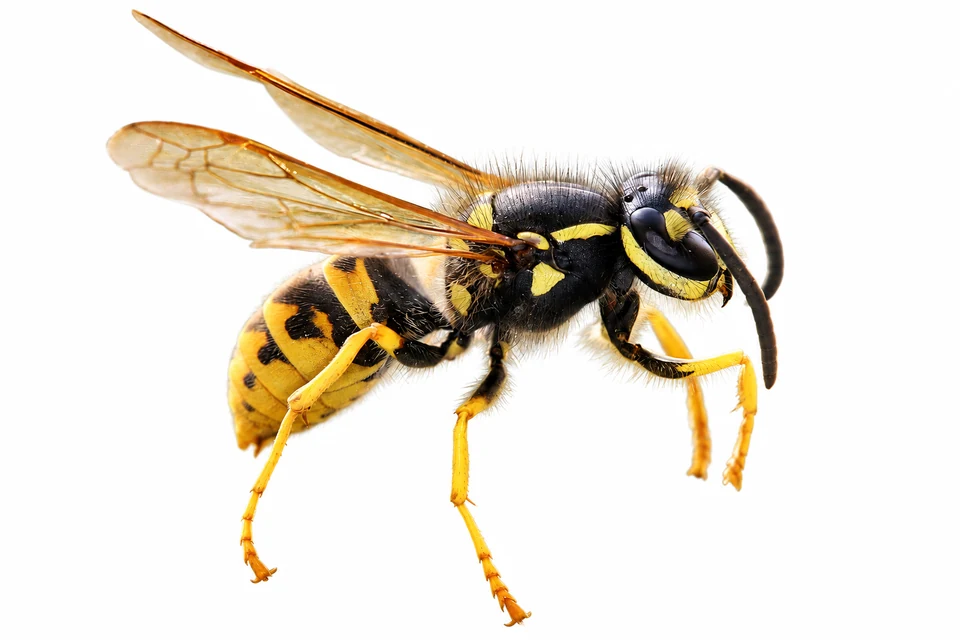
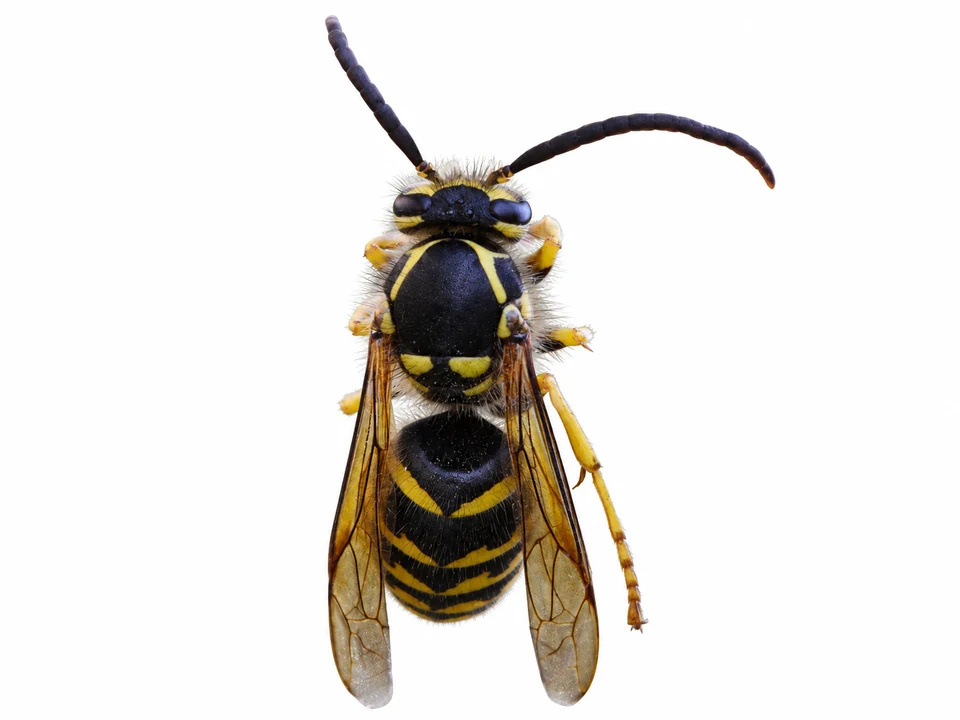
German yellowjacket in profile.

Yellow jacket

Vespula spp.

Compact body · yellow and black

100 mcgmaintenance
Biology, nest & product
Identification
Smooth-looking, compact yellow-and-black wasp. Wings fold lengthwise at rest; markings vary by species.
Behaviour
Some species scavenge near food and sweet drinks, especially later in summer. Nest disturbance can trigger repeated stings.

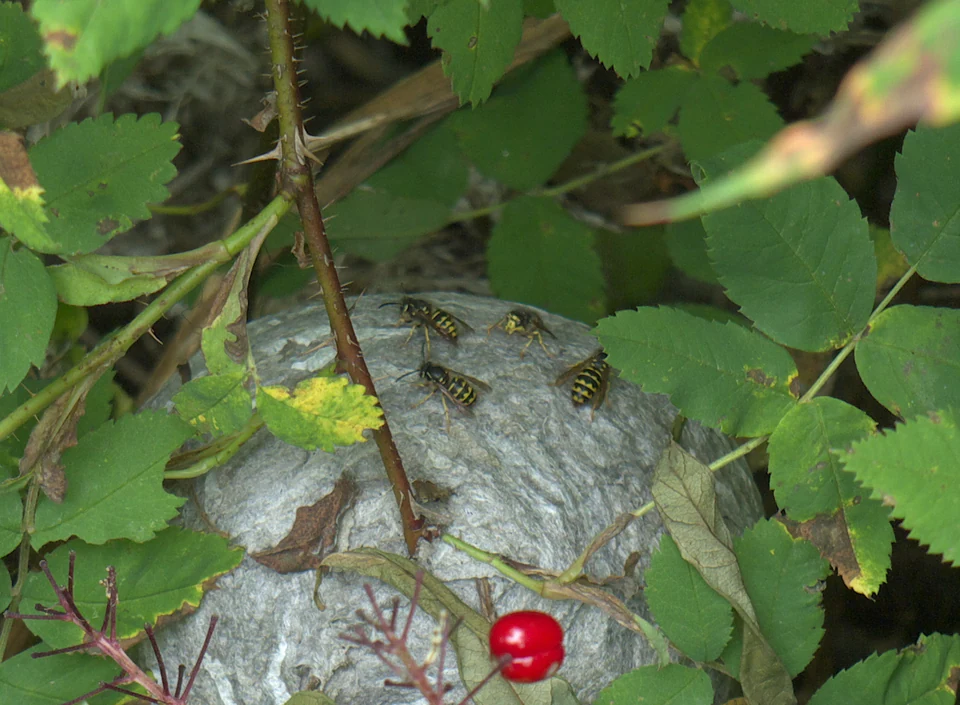
Hidden paper nest, often underground

Yellowjackets at the entrance to an underground nest.
Representative Vespula ground nest: workers at its entrance.Stephan Sprinz · CC BY 4.0

Enclosed paper combs in old rodent burrows or other cavities, including wall voids. Flight traffic through a small opening may be the only clue.

Original photo ↗Biology reference ↗

HollisterStier venom

Canadian supplier: Juno / Viva Allergy

Five-dose vial
550 mcg · freeze-dried
Reconstitution volume
5.5 mL
Reconstituted concentration
100 mcg/mL
Maintenance dose
1.00 mL SC = 100 mcg

Strong cross-reactivity with yellow and white-faced hornet venoms. Select individual venom or mixed vespid after interpreting testing and history.

Canadian order form ↗
Photo credits & originals

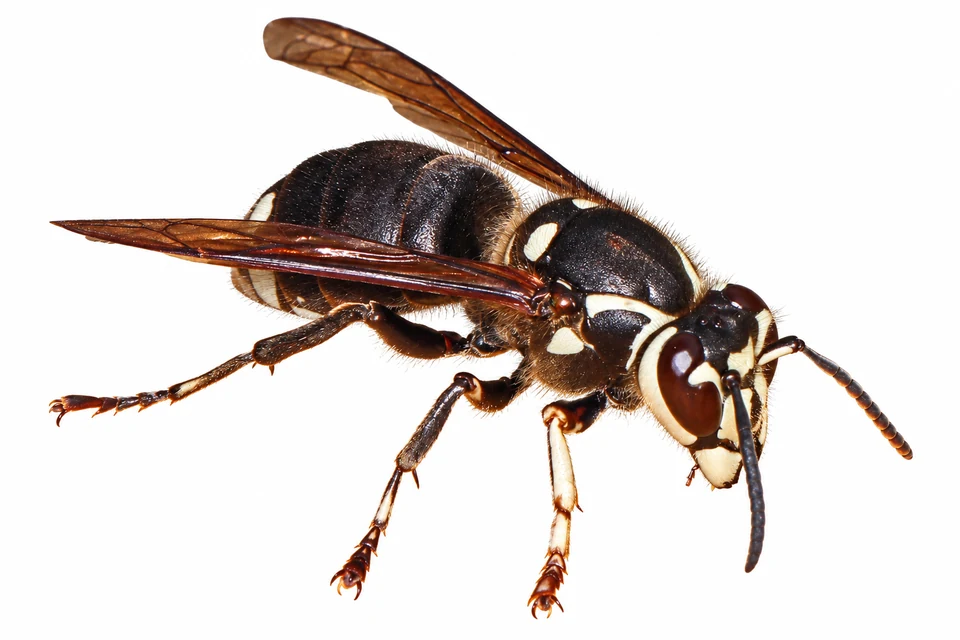
Richard Bartz · CC BY-SA 2.5AI-edited from the original photograph.

White-faced hornet showing its black-and-white markings.

White-faced hornet

Dolichovespula maculata

Black and ivory · also “bald-faced”

100 mcgmaintenance
Biology, nest & product
Identification
Predominantly black with ivory-white markings on the face and abdomen. Despite the common name, this is an aerial yellowjacket.
Behaviour
Hunts other insects and defends the nest when disturbed. It can sting more than once.

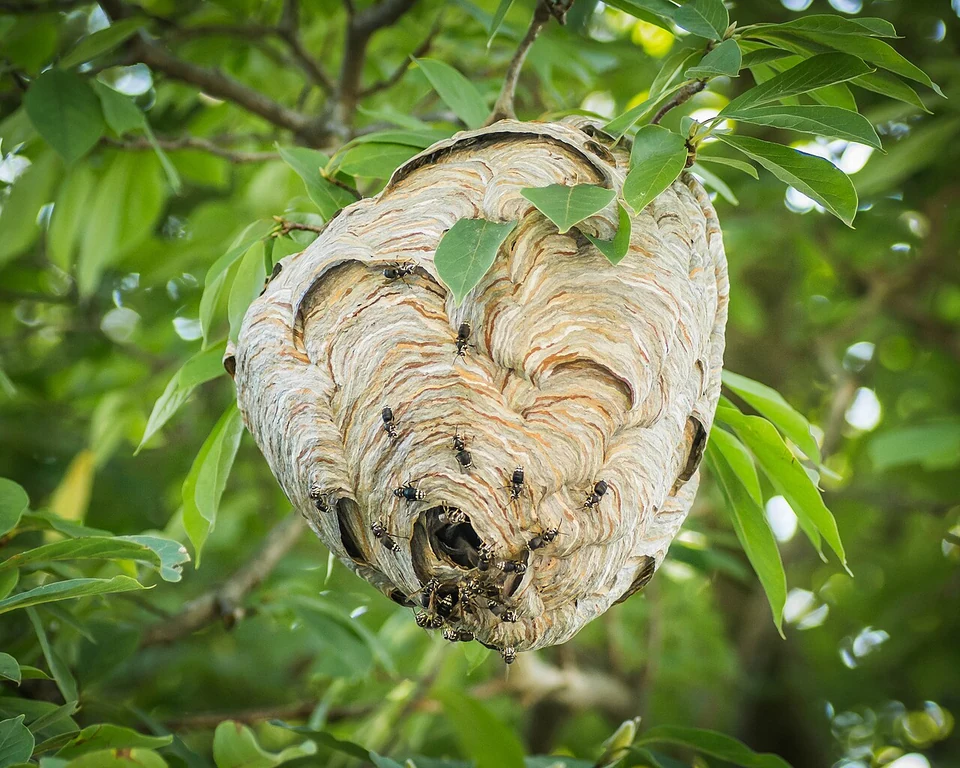
Enclosed aerial paper nest

White-faced hornets on a large enclosed paper nest in a tree.
White-faced hornets on a large enclosed paper nest in a tree.Philip N. Cohen · CC BY-SA 4.0

Layered grey paper envelope around combs, typically suspended from a tree, shrub or building. The colony is seasonal.

Original photo ↗Biology reference ↗

HollisterStier venom

Canadian supplier: Juno / Viva Allergy

Five-dose vial
550 mcg · freeze-dried
Reconstitution volume
5.5 mL
Reconstituted concentration
100 mcg/mL
Maintenance dose
1.00 mL SC = 100 mcg

Included in mixed vespid; strongly cross-reactive with yellow jacket and yellow hornet venom.

Canadian order form ↗
Photo credits & originals

Judy Gallagher · CC BY 2.0AI-edited from the original photograph.
Yellow hornet at Rattray Marsh, Mississauga, Ontario.

Yellow hornet

Dolichovespula arenaria

Yellow and black · aerial yellowjacket

100 mcgmaintenance
Biology, nest & product
Identification
A yellow-and-black aerial yellowjacket. Colour alone does not reliably distinguish it from Vespula.
Behaviour
A social predator that feeds insects to its young. Nest disturbance is a relevant exposure clue.

Paper nest in trees or shrubs

Enclosed aerial paper nest photographed as Dolichovespula arenaria.
Enclosed aerial paper nest photographed as Dolichovespula arenaria.Robert Webster / xpda.com · CC BY-SA 4.0

Usually an enclosed paper nest above ground in vegetation or on a structure; nest sites vary. It occurs widely across Canada.

Original photo ↗Biology reference ↗

HollisterStier venom

Canadian supplier: Juno / Viva Allergy

Five-dose vial
550 mcg · freeze-dried
Reconstitution volume
5.5 mL
Reconstituted concentration
100 mcg/mL
Maintenance dose
1.00 mL SC = 100 mcg

Included in mixed vespid; strongly cross-reactive with yellow jacket and white-faced hornet venom.

Canadian order form ↗
Photo credits & originals

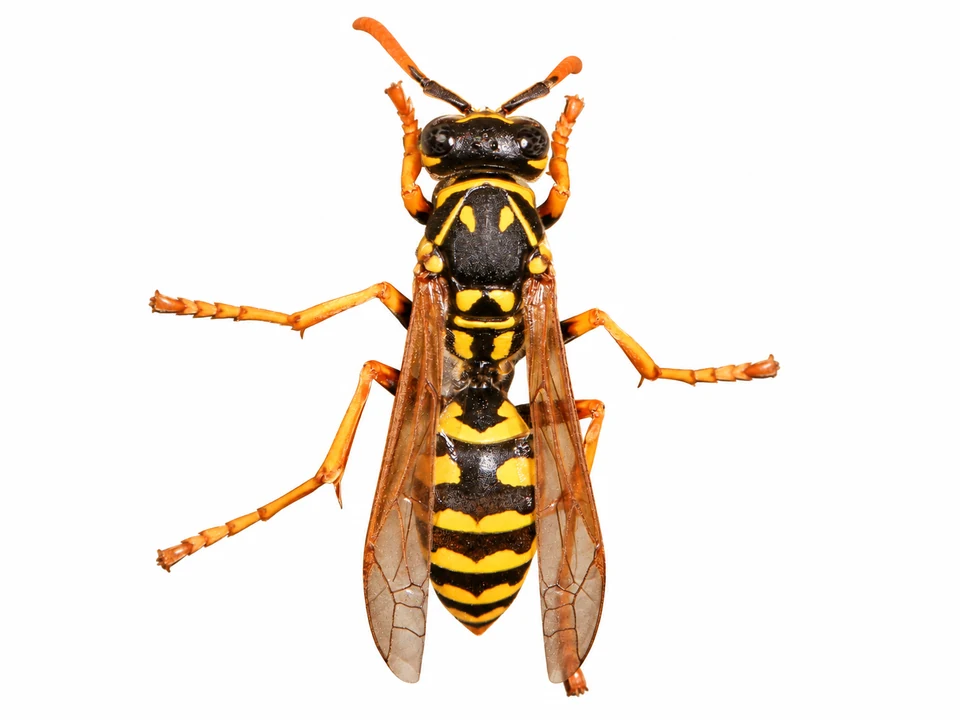
Ryan Hodnett · CC BY-SA 4.0AI-edited from the original photograph.
European paper wasp (Polistes dominula), showing its slender waist, yellow-and-black markings and orange antennae, isolated on a white background.

Paper wasp

Polistes spp.

Slender waist · long dangling legs

100 mcgmaintenance
Biology, nest & product
Identification
Slender body and long legs that hang below it in flight. Colour varies from reddish-brown to yellow and black.
Behaviour
Hunts caterpillars and other insects. Usually less defensive than yellowjackets, but can sting repeatedly when threatened.

Open umbrella-shaped comb

Paper wasps on an open comb nest attached beneath a shelter.
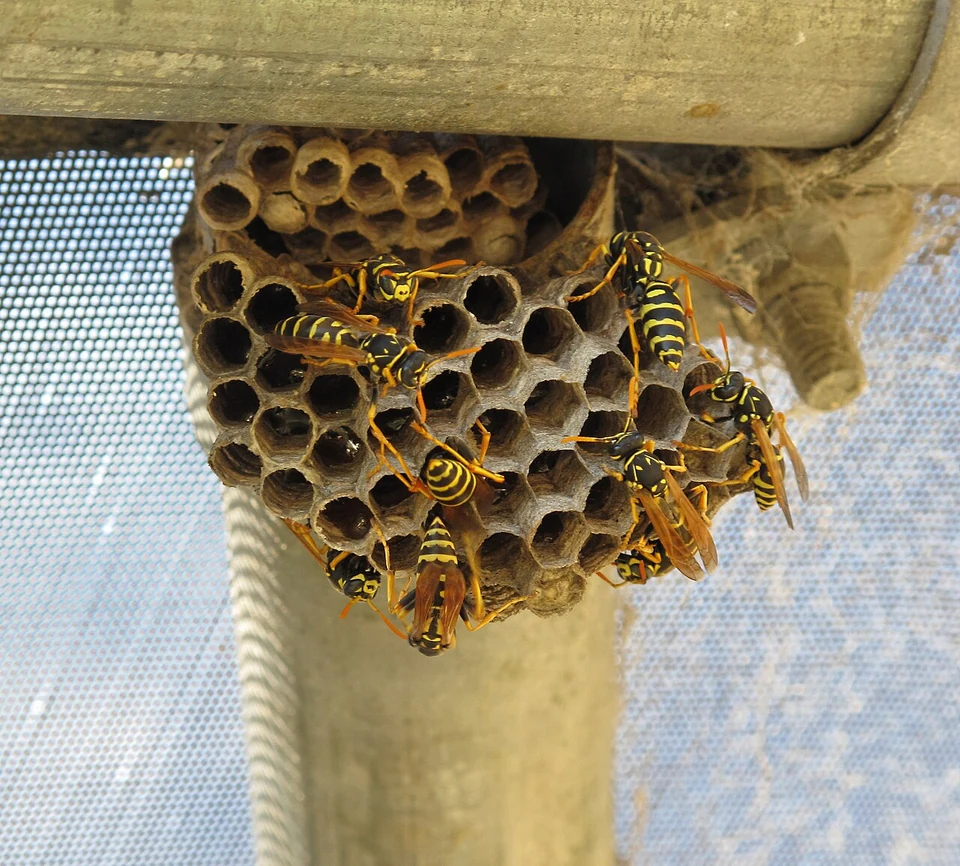
Representative Polistes nest: exposed cells without a paper envelope.Downtowngal · CC BY-SA 3.0

A single exposed paper comb with visible cells, often under eaves, beams or other sheltered overhangs. No enclosing paper envelope.

Original photo ↗Biology reference ↗

HollisterStier venom

Canadian supplier: Juno / Viva Allergy

Five-dose vial
550 mcg · freeze-dried
Reconstitution volume
5.5 mL
Reconstituted concentration
100 mcg/mL
Maintenance dose
1.00 mL SC = 100 mcg

The product is labelled “Wasp.” Polistes is not included in mixed vespid; cross-reactivity with the other vespids is less complete.

Canadian order form ↗
Photo credits & originals

European paper wasp (Polistes dominula), photographed in Saanichton, British Columbia.Judy Gallagher · CC BY 2.0AI-edited from the original photograph.
German yellowjacket in profile.Yellow jacket
Yellow hornet at Rattray Marsh, Mississauga, Ontario.Yellow hornet
White-faced hornet showing its black-and-white markings.White-faced hornet

Mixed vespid

Yellow jacket + two hornet venoms

Three venoms · one product

300 mcgmaintenance · 100 mcg each
Components & product
Yellow jacket
100 mcg
Yellow hornet
100 mcg
White-faced hornet
100 mcg

Per 1.00 mL maintenance dose.

HollisterStier venom

Canadian supplier: Juno / Viva Allergy

Five-dose vial
1,650 mcg · freeze-dried
Reconstitution volume
5.5 mL
Reconstituted concentration
300 mcg/mL
Maintenance dose
1.00 mL SC = 300 mcg total

Equal amounts of yellow jacket, yellow hornet and white-faced hornet venom. Does not contain honey bee or Polistes wasp. For treatment, not diagnostic skin testing.

Canadian order form ↗
Photo credits & originals

Richard Bartz · CC BY-SA 2.5AI-edited from the original photograph.
Ryan Hodnett · CC BY-SA 4.0AI-edited from the original photograph.
Judy Gallagher · CC BY 2.0AI-edited from the original photograph.
02

Treatment course

Weekly build-up

15 dose steps to maintenance. One injection per selected product at each weekly visit, advancing only if tolerated.

Dose steps are not calendar weeks. Missed visits or repeated doses may extend the course; follow the clinic’s adjustment protocol.

HollisterStier’s suggested schedule ↗ · The prescriber may individualize the starting dose and progression.

Maintenance

After the first maintenance dose, keep the same dose and space subsequent injections as follows:

  1. 1 weekNext injection
  2. 2 weeksFollowing injection
  3. 3 weeksFollowing injection
  4. Every 4 weeksThen continue in year 1

Each interval is measured from the preceding injection. Extend only if tolerated.

Later spacing to 6–12 weeks is individualized by the allergist.

Clinical guidance

Confirm the indication and relevant venom sensitization. Positive tests alone or large local reactions do not routinely warrant VIT; assess skin-only systemic reactions individually.

Review the suggested schedule before signing. Highly sensitive patients may need lower starting concentrations or smaller increments; choose an individualized protocol when needed.

Severe initial reactions, mast cell disorders, honey bee allergy, repeated exposure or reactions during VIT may favour extended or indefinite treatment. Assess baseline tryptase, especially after severe sting anaphylaxis. Breakthrough systemic sting reactions on maintenance require reassessment of venom selection and dosing.

CSACI VIT guidance ↗ · HollisterStier build-up schedule ↗

References & availability

Confirm current product supply with the pharmacy.

Treatment selection

Confirm the treatment plan against the sting history and relevant venom testing. Photographs support identification. Clinical reference ↗

About Allergy Atlas

Payam Salimi

AUTHOR

Payam Salimi

PGY-4 · Clinical Immunology & Allergy
University of Manitoba

I created Allergy Atlas during my allergy residency as a practical educational resource. I’m continually updating the content, adding resources, and improving the site as I learn and receive feedback. I hope you find it useful.

If you notice an error, have a suggestion, or would like to get in touch, please contact salimip@myumanitoba.ca.

Reviewers & Advisors

Allergy Atlas continues to evolve with advice, feedback, and contributions from colleagues. Thank you to those helping improve this resource.

  • Dr. Lundy McKibbin (University of Manitoba)

Compare immunoglobulins