allergyatlasCANADIAN TREATMENT GUIDEFor Canadian clinicians

Immunoglobulin.

Immunoglobulin replacement

5 products

Select up to 3 products to compare
IVIG
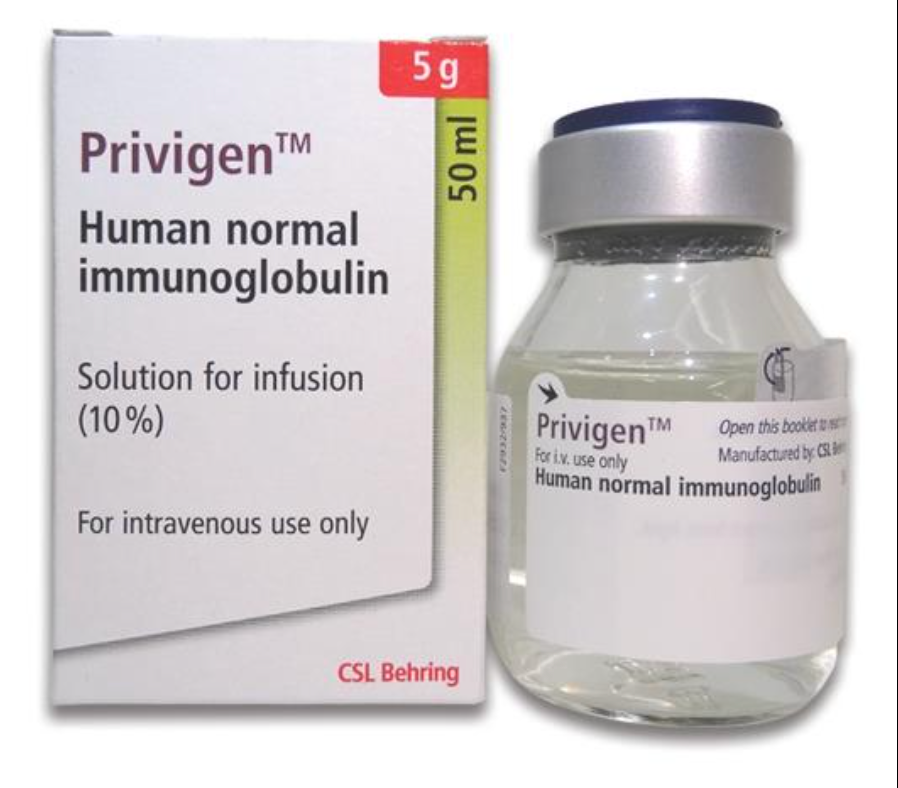
Privigen 5 g / 50 mL carton and vial, international reference
International reference packaging

Privigen

10%

Ready-to-use vials · CSL Behring

Every 3–4 weeks

0.2–0.8 g/kg per infusion

CBS-listed packs

2.5 g5 g10 g20 g40 g

Clinical & product details

Replacement indication

Primary and secondary immunodeficiency (PID / SID).

Pediatric PID data from 3 years; use under 3 years has not been established.

Canadian label dosing

IVIG. PID/SID: 0.2–0.8 g/kg every 3–4 weeks; adjust to clinical response and IgG levels.

Administration

IV infusion; follow the monograph’s initial rate and escalation schedule.

Pack sizes & access

2.5 g / 25 mL; 5 g / 50 mL; 10 g / 100 mL; 20 g / 200 mL; 40 g / 400 mL.

Routine supply: CBS and Héma-Québec.

Ingredients & IgA

L-proline; water for injection, with hydrochloric acid and sodium hydroxide for pH adjustment.

IgA: ≤25 micrograms/mL.

The 2025 label advises weighing benefit and risk in hyperprolinemia.

Storage

Store at 2–25°C until the labelled expiry. Keep in the original carton; do not freeze.
IVIG · SCIG
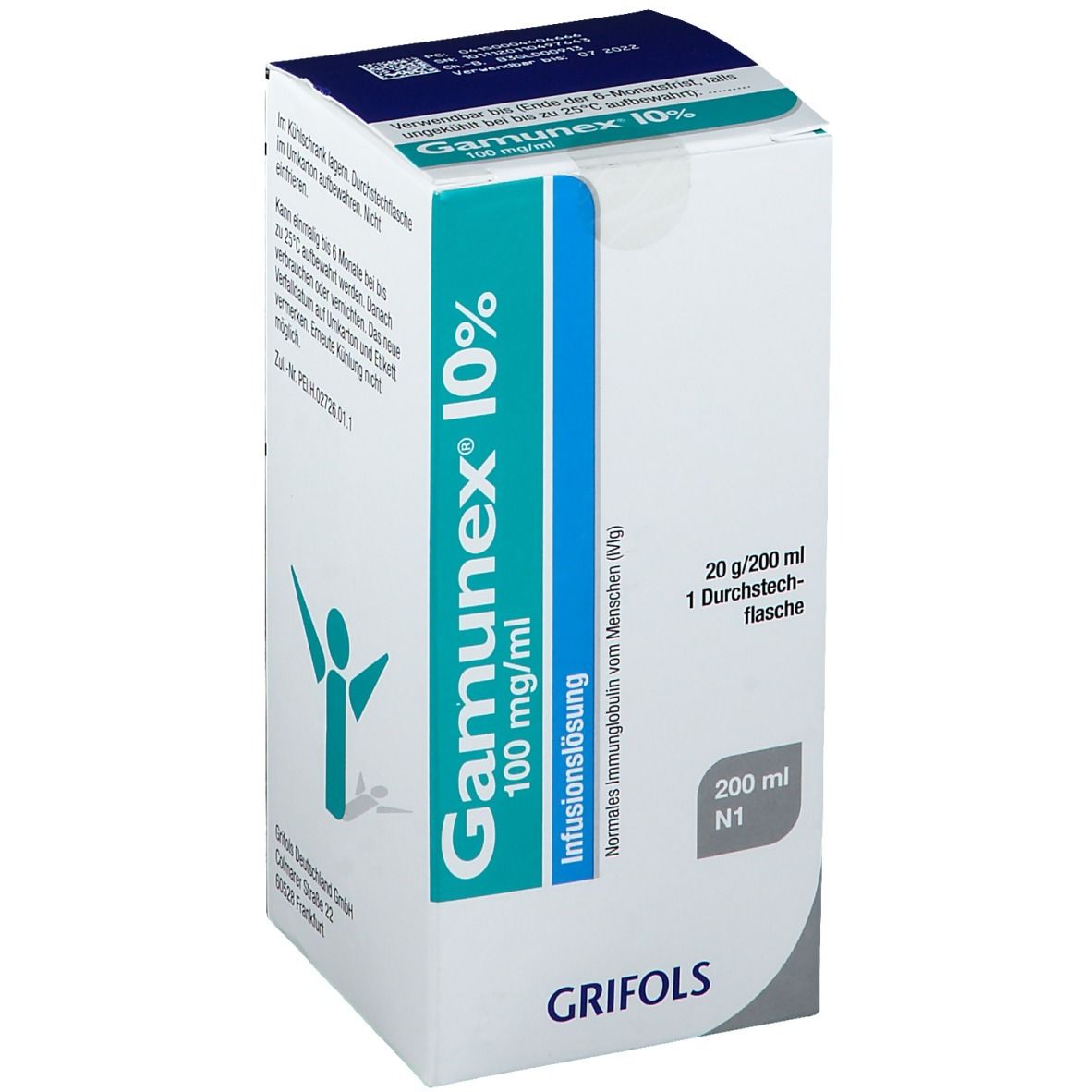
Gamunex 10%, 20 g / 200 mL carton, German reference packaging
German reference packaging · 20 g / 200 mL

Gamunex

10%

Ready-to-use vials · Grifols

Every 3–4 weeks

PID: 0.1–0.6 g/kg per infusion

CBS-listed packs

2.5 g5 g10 g20 g40 g

Clinical & product details

Replacement indication

Primary and secondary humoral immunodeficiency.

Pediatric use described at ages 1–18 years; SC evidence is limited.

Canadian label dosing

IVIG. PID: 0.1–0.6 g/kg every 3–4 weeks. SID regimens are indication-specific; see the monograph.

SCIG. PID/SID IV-to-SC switch: initial weekly grams = prior IV grams × 1.37 ÷ interval in weeks. Adjust to clinical response and IgG levels.

Administration

IV or SC administration; follow the route-specific preparation, site volumes and infusion rates.

Pack sizes & access

2.5 g / 25 mL; 5 g / 50 mL; 10 g / 100 mL; 20 g / 200 mL; 40 g / 400 mL.

Routine supply: CBS; confirm Québec access.

Ingredients & IgA

Glycine and water for injection.

IgA: ≤84 micrograms/mL (average 46).

Storage

2–8°C; may be kept at ≤25°C for up to 6 months within the original expiry, then use or discard. Do not freeze.

IVIG
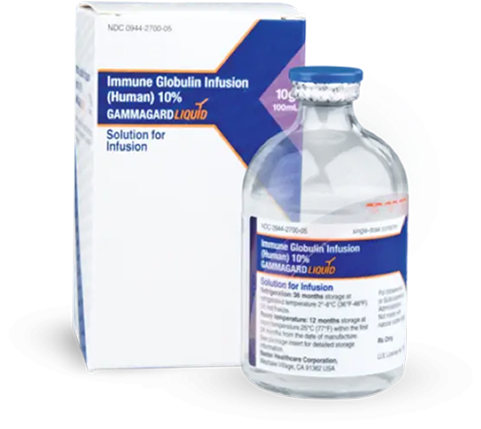
Gammagard Liquid 10 g / 100 mL U.S. carton and vial
U.S. packaging · Canadian label is IV only

Gammagard Liquid

10%

Ready-to-use vials · Takeda

Every 2–4 weeks

PID maintenance: 0.2–0.8 g/kg

CBS-listed packs

2.5 g5 g10 g20 g30 g

Clinical & product details

Replacement indication

Primary and secondary immunodeficiency, including CLL and pediatric HIV.

Studied above 24 months of age; no dedicated pediatric studies.

Canadian label dosing

IVIG. PID: initial 0.4–0.8 g/kg, then 0.2–0.8 g/kg every 2–4 weeks. SID: 0.2–0.4 g/kg every 3–4 weeks; transplant regimens differ.

Administration

IV only in Canada. Follow Canadian infusion rates; foreign packaging may show other routes.

Pack sizes & access

2.5 g / 25 mL; 5 g / 50 mL; 10 g / 100 mL; 20 g / 200 mL; 30 g / 300 mL.

The monograph’s 1 g vial is not on current routine supply lists.

Routine supply: CBS and Héma-Québec.

Ingredients & IgA

Glycine and water for injection.

IgA: ≤140 micrograms/mL.

Storage

2–8°C. Below 25°C: expiry is the earlier of 12 months after removal or 24 months after manufacture; record the new date. Do not rerefrigerate or freeze.

IVIG
Takeda manufacturer logo
Product photo unavailable

Gammagard S/D

5% or 10%

Powder for reconstitution · Takeda

Monthly · individualized

PID: initial 0.2–0.4 g/kg

CBS-listed packs

5 g

Clinical & product details

Replacement indication

Primary immunodeficiency; B-cell CLL with hypogammaglobulinemia and/or recurrent bacterial infections.

Pediatric experience above 24 months of age; no dedicated pediatric studies.

Canadian label dosing

IVIG. PID: initial 0.2–0.4 g/kg; subsequent monthly doses individualized to response. The label’s ≥0.1 g/kg monthly minimum is not a usual maintenance target. B-cell CLL: 0.4 g/kg every 3–4 weeks.

Administration

Reconstitute with the supplied sterile water, not saline. Follow concentration-specific preparation, IV rates and post-reconstitution limits.

Pack sizes & access

5 g kit.

Reconstitute the 5 g kit to 5% (50 mg/mL) or 10% (100 mg/mL).

Routine supply: CBS; confirm Québec access.

Ingredients & IgA

Glycine, glucose, human albumin, sodium chloride, polyethylene glycol, polysorbate 80, octoxynol 9 and tri-n-butyl phosphate.

IgA: ≤2.2 micrograms/mL at 5% (double at 10%).

Low IgA content does not establish safety after a severe immunoglobulin reaction.

Storage

Store the unopened kit at ≤25°C. Do not freeze. Reconstituted product has separate handling and storage limits; see the monograph.

IVIG · SCIG
Grifols manufacturer logo
Product photo unavailable

IGIVnex

10%

Ready-to-use vials · Grifols

Every 3–4 weeks

PID: 0.1–0.6 g/kg per infusion

CBS-listed packs

20 g

Clinical & product details

Replacement indication

Primary and secondary humoral immunodeficiency.

Pediatric use described at ages 1–18 years; SC evidence is limited.

Canadian label dosing

IVIG. PID: 0.1–0.6 g/kg every 3–4 weeks. SID regimens are indication-specific; see the monograph.

SCIG. PID/SID IV-to-SC switch: initial weekly grams = prior IV grams × 1.37 ÷ interval in weeks. Adjust to clinical response and IgG levels.

Administration

IV or SC administration; follow the route-specific preparation, site volumes and infusion rates.

Pack sizes & access

20 g / 200 mL.

Other labelled sizes (2.5, 5, 10 and 40 g) require local supply confirmation.

Routine supply: CBS; confirm Québec access.

Ingredients & IgA

Glycine and water for injection.

IgA: ≤84 micrograms/mL (average 46).

Storage

2–8°C; may be kept at ≤25°C for up to 6 months within the original expiry, then use or discard. Do not freeze.

Practical prescribing notes

Dose & response

Usual IV replacement is 0.4–0.6 g/kg every 3–4 weeks (CBS guide); label ranges vary. Individualize to infections, clinical response, IgG levels and tolerability. Use provincial dosing-weight policy and the selected product’s Canadian conversion instructions.

Ontario dosing-weight tool · CBS clinical guide

Before starting or switching

Review prior reactions, product-specific contraindications, hydration, renal and thrombotic risk. Consider hemolysis, aseptic meningitis, vaccine timing and serologic interference. IgA content alone does not predict reaction risk. Home SC therapy requires training and follow-up.

Scope & supply

Replacement therapy only. Packs reflect current CBS supply; Québec listings are identified separately. Confirm local availability, the full monograph and infusion protocol when prescribing.

About Allergy Atlas

Payam Salimi

AUTHOR

Payam Salimi

PGY-4 · Clinical Immunology & Allergy
University of Manitoba

I created Allergy Atlas during my allergy residency as a practical educational resource. I’m continually updating the content, adding resources, and improving the site as I learn and receive feedback. I hope you find it useful.

If you notice an error, have a suggestion, or would like to get in touch, please contact salimip@myumanitoba.ca.

Reviewers & Advisors

Allergy Atlas continues to evolve with advice, feedback, and contributions from colleagues. Thank you to those helping improve this resource.

  • Dr. Lundy McKibbin (University of Manitoba)

Compare immunoglobulins